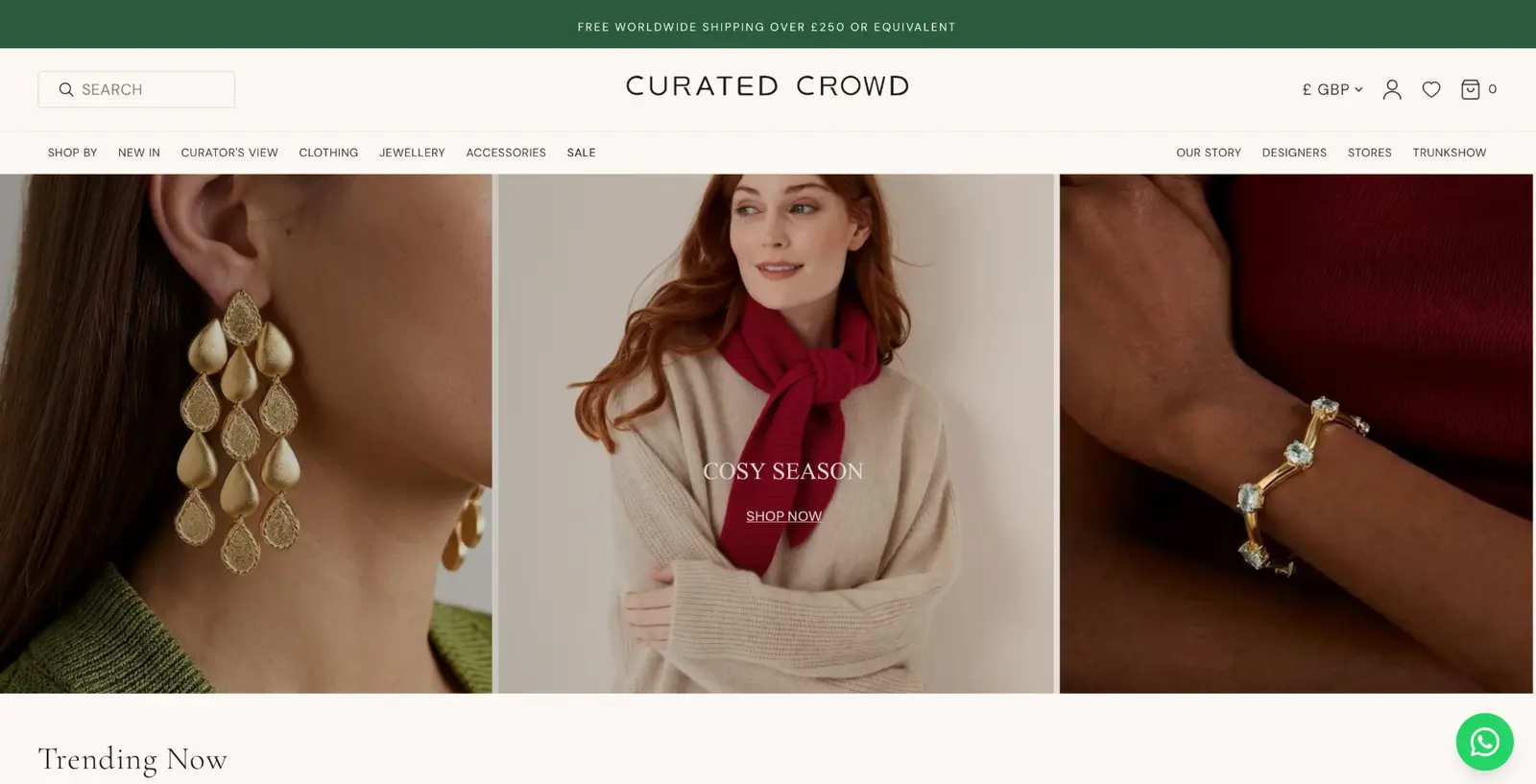
Built for complex marketplaces
Bring multiple brands together, seamlessly.
A multi-brand marketplace must do more than display products from different sellers. Catalogue structures, stock ownership, order routing, fulfilment, payments and international trading rules all need to work together.
The relevant challenges vary from one marketplace to the next, but often include:
Brands and catalogues
Multiple brands and catalogue structures.
Distributed stock
Stock held across different locations or sellers.
Orders and fulfilment
Order routing and fulfilment rules.
International selling
International delivery and applicable duties.
Operational systems
Integrations with seller, inventory and operational systems.
Customer experience
A consistent experience across a complex backend.
For multi-vendor models beyond fashion, see our wider marketplace development page.
Core capabilities
A marketplace that works for your business.
These are engineering capabilities we build to suit each marketplace, not a prebuilt product. Which of them a project needs depends on its operating model.
Multi-brand catalogues
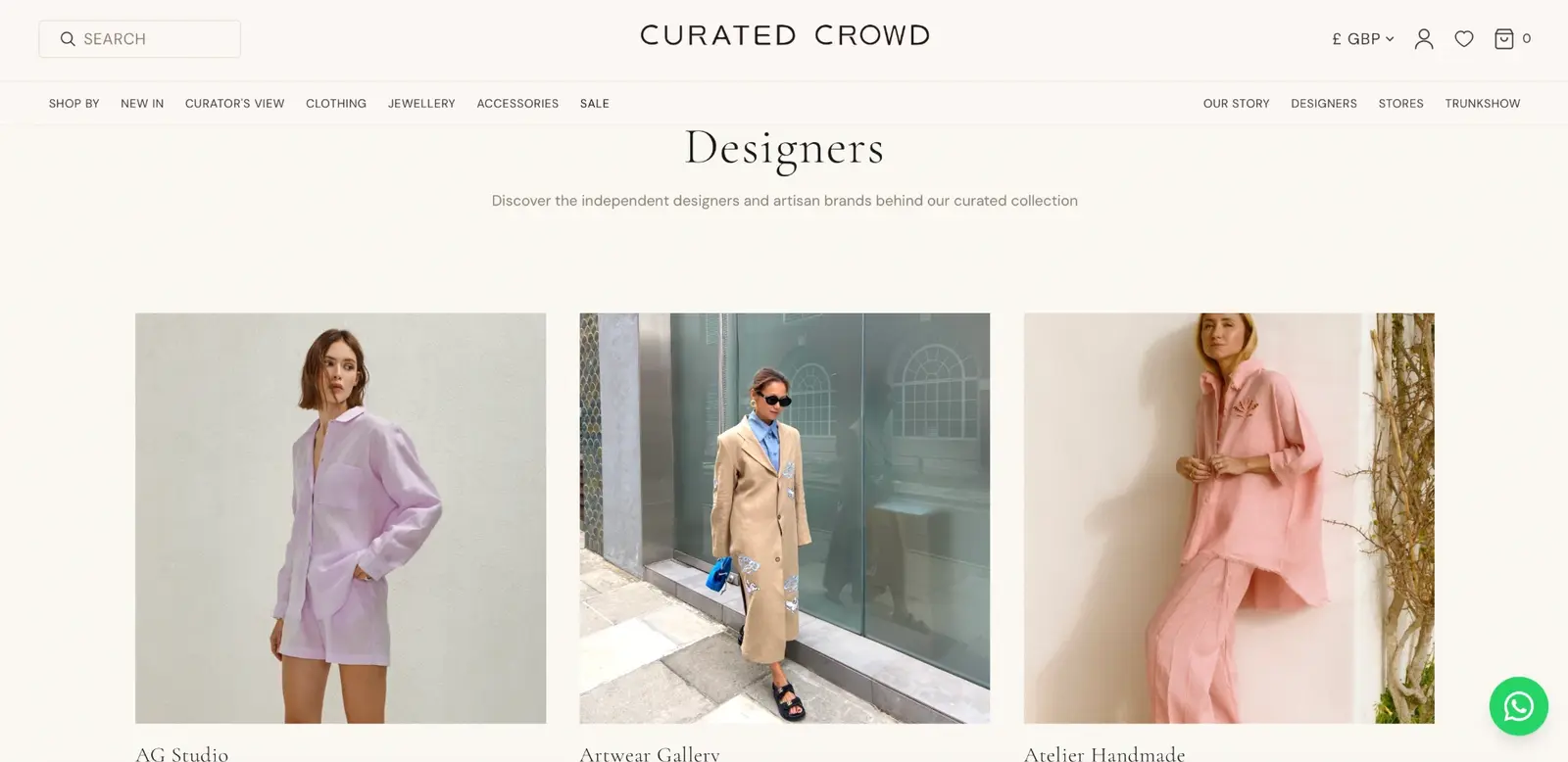
Bring products from multiple brands into a coherent customer experience, with catalogue structures that reflect the needs of the business.
Flexible fulfilment
Design order routing and fulfilment around stock availability, seller locations and the operational model.
International commerce
Account for international markets, currencies, applicable duties and delivery requirements where the business model demands it.
Connected operations
Integrate the marketplace with inventory, seller management, payments and other operational systems as required.
Real-world example
A more flexible foundation for a multi-brand marketplace.
We worked with Curated Crowd to migrate its multi-brand fashion marketplace from a legacy PHP platform to MedusaJS. The platform supports a complex marketplace model involving multiple brands, stock locations and international fulfilment requirements.
Stock is held across a UK warehouse and with the designers themselves, who ship direct, and the platform accounts for where each product is held. It calculates duties dynamically from stock location and the customer’s destination, and a single order can include products from several brands, with fulfilment handled accordingly. SEO migration was part of the replatform.
Read the Curated Crowd case study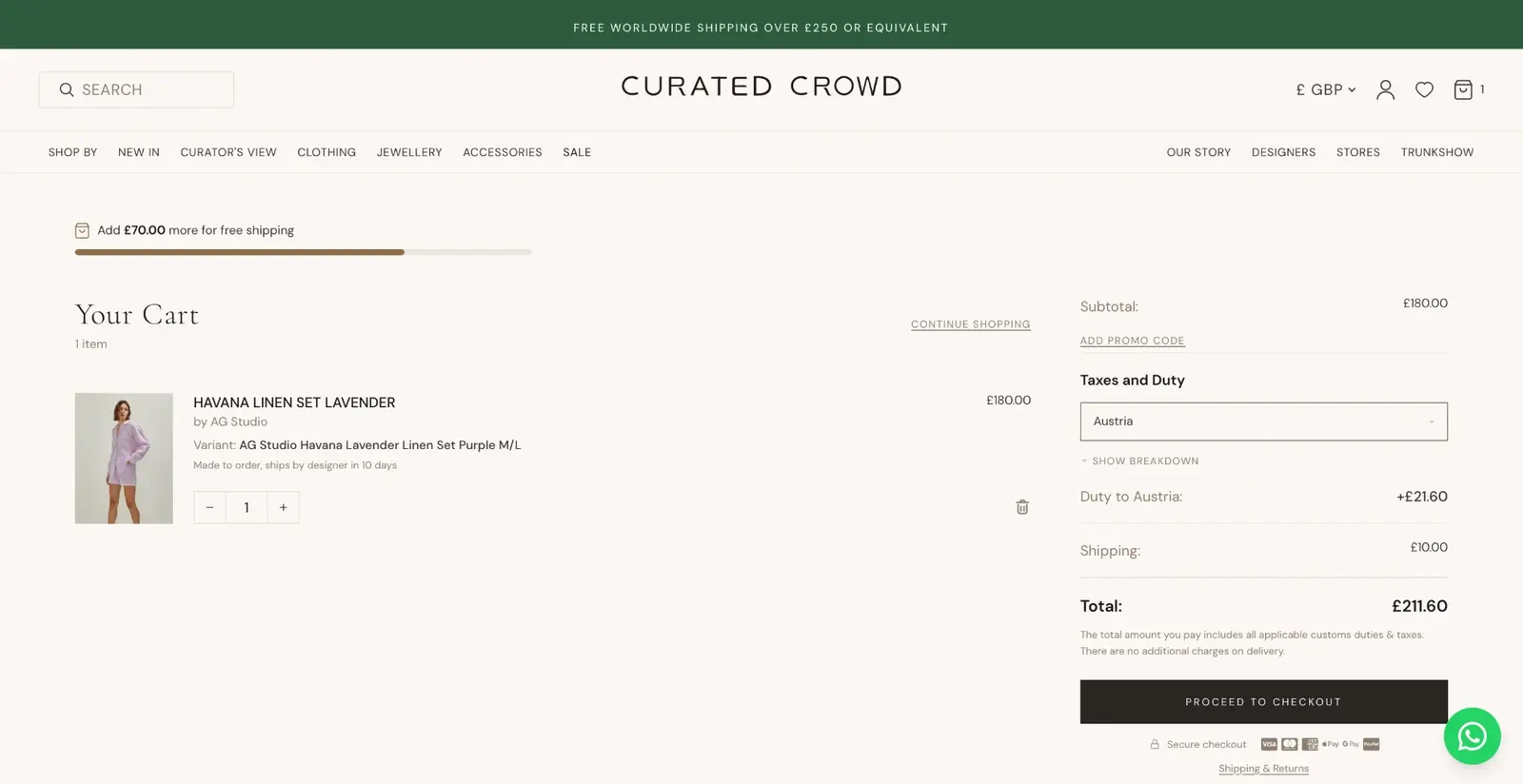
Delivery approach
A marketplace designed around your operating model.
We start from how your business actually trades, then design and build the platform around it. See how we work with clients.
-
01
Understand
Map brands, sellers, stock ownership, markets, fulfilment and commercial rules.
-
02
Design
Define the architecture, catalogue model, integrations and operational workflows.
-
03
Build
Implement the marketplace, seller requirements, customer experience and integrations.
-
04
Evolve
Support additional brands, markets, fulfilment models and future platform improvements.
Integrations and operations
Connected to your wider ecosystem.
We consider the wider systems that make a marketplace work, from inventory and fulfilment to payments, tax and seller operations. The aim is to create a platform that supports the real business, rather than forcing the business into unnecessary technical constraints.
Typical integration requirements include:
Inventory and fulfilment
Stock across locations and how orders are routed and shipped.
Payments and tax
Taking payment and accounting for duties and taxes on cross-border orders.
Seller operations
The tools and data brands and sellers need to take part.
Which of these a marketplace needs, and which systems they connect to, is agreed per project. Replatforming an existing marketplace? See Medusa replatforming.
Questions
Frequently asked questions.
What is a multi-brand fashion marketplace?
A store where products from many independent brands or designers are sold through one platform, with one customer experience and often one checkout.
Can stock be held in different places?
Yes. For Curated Crowd, stock is held across a UK warehouse and with the designers themselves, who ship direct, and the platform accounts for where each product is held.
Can a marketplace handle international orders and duties?
Yes. For Curated Crowd, the platform dynamically calculates duties based on stock location and the customer’s destination.
Can an existing marketplace move to MedusaJS?
Yes. Pulsehub replatformed Curated Crowd from PHP to MedusaJS, including SEO migration. Read more about Medusa replatforming.
How is this different from your marketplace development page?
Marketplace development covers multi-vendor marketplaces in general, including the Artpics art marketplace. This page focuses on multi-brand fashion and lifestyle marketplaces with distributed stock and international fulfilment.
Let’s build your marketplace.
Whether you’re launching a multi-brand platform or rethinking an existing marketplace, let’s discuss the architecture and capabilities your business needs.
Discuss your project