Built around your products
Turn complex products into seamless experiences.
Standard ecommerce platforms can struggle when products have multiple options, interdependent rules, variable pricing or made-to-order requirements. A successful configurator must make those choices intuitive for customers while keeping the underlying commerce and operational logic reliable.
Not every project needs all of the following, but these are the challenges a configurator can involve:
Options and dependencies
Configurable product options, and rules about which choices can be combined.
Dynamic pricing
Prices that follow the customer’s selections.
Rules and validation
Product rules that keep every configuration valid and buildable.
Systems integration
Connection to catalogue, inventory and order systems.
Made-to-order workflows
Production workflows that follow each configured order.
What Pulsehub builds
Configuration built around your business model.
These are the engineering capabilities we bring to a configurator project. What a project needs depends on your products, your customers and how the product is made. Pulsehub builds these on headless MedusaJS.
Tailored experiences
Give customers control over product options through an intuitive experience designed around how your products are bought and made.
Complex logic
Handle dependent options, configuration rules, validation and dynamic pricing in a way that remains maintainable as your products evolve.
Operational integration
Connect the customer-facing experience with the commerce, ordering and production systems needed to deliver the finished product.
Real-world example
Configuration built for made-to-order luxury.
We worked with By The Namesake to build a bespoke product configurator for a luxury leather brand migrating from Shopify to MedusaJS. The solution supports complex configuration choices, dynamic pricing and integration with the wider commerce and production workflow.
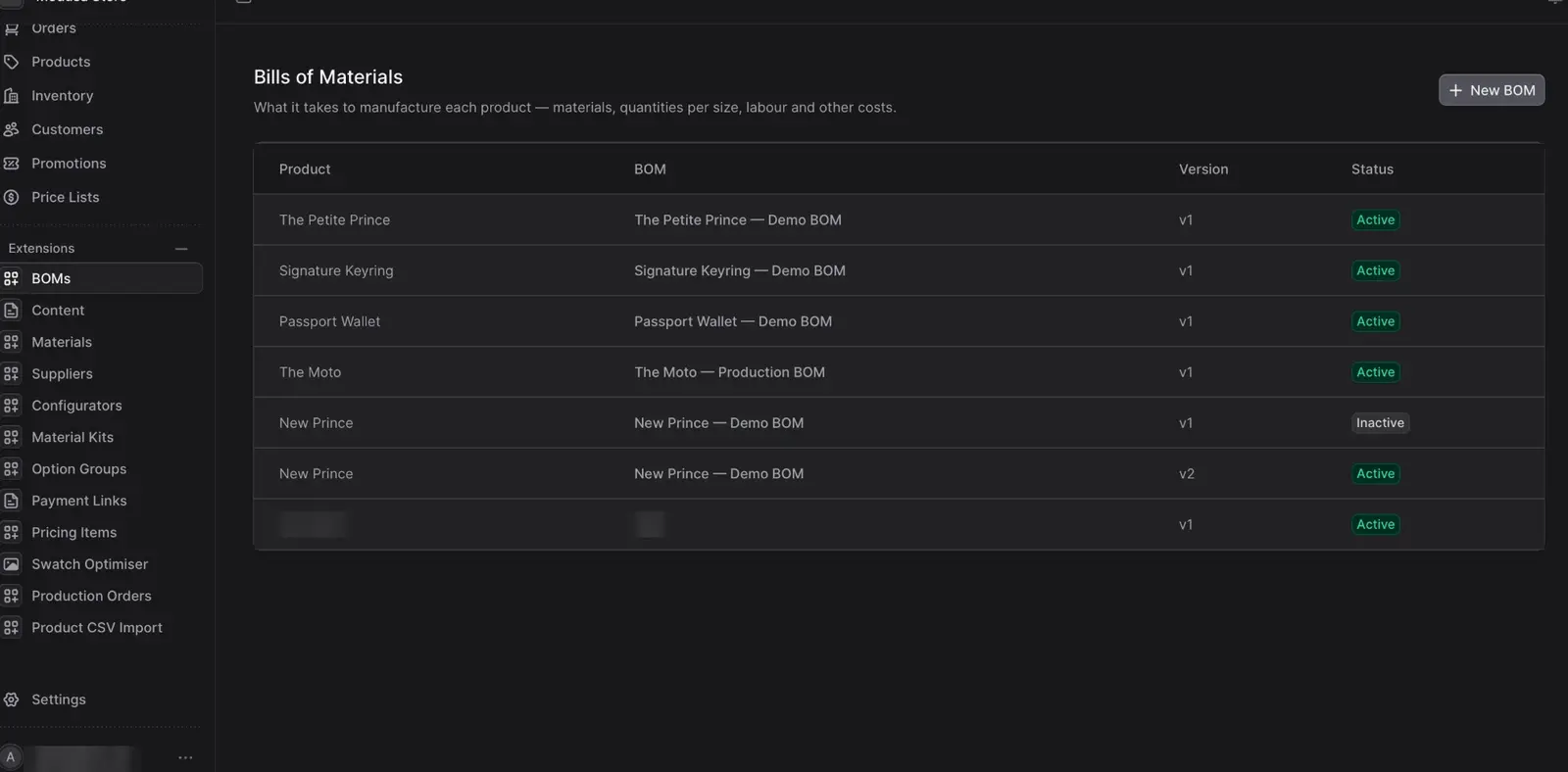
The jacket has more than a million possible combinations, each priced in real time. The same platform includes the operational side: materials and suppliers, bills of materials and manufacturing integration.
Read the By The Namesake case study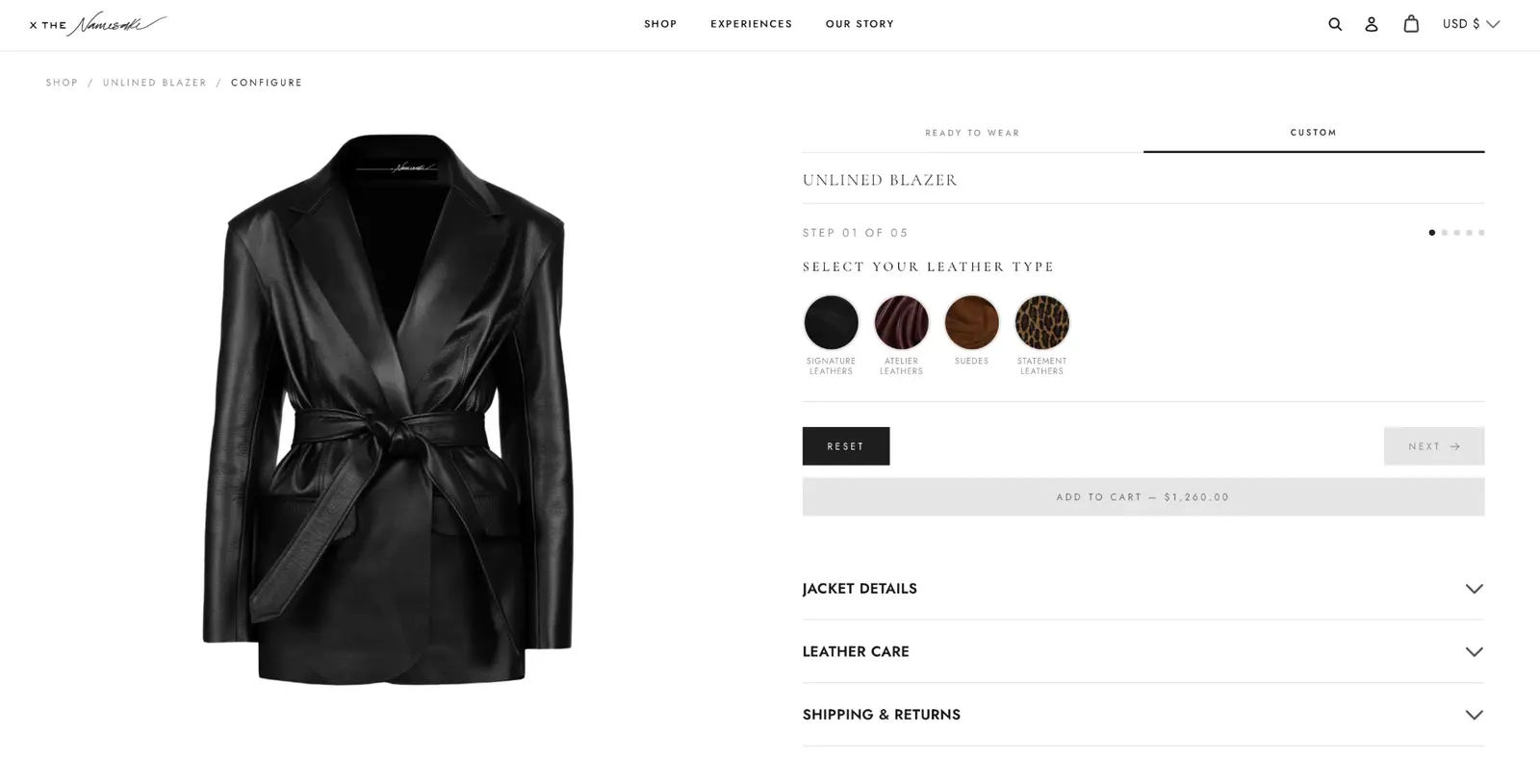
How we approach configurators
Designed for complexity. Built to evolve.
Each stage ends with something you can review, so the configurator is shaped around how your products are actually made and sold. See how we work with clients.
-
01
Understand
Map the product structure, customer choices, pricing rules and operational constraints.
-
02
Design
Define the customer experience, configuration model and technical architecture.
-
03
Build and validate
Implement the configurator, business rules and integrations, with thorough testing.
-
04
Evolve
Support new products, configuration options, pricing changes and operational improvements.
Beyond the storefront
The logic behind the experience matters.
A configurator is only as effective as the systems behind it. We consider pricing, product data, order handling and operational workflows together, so the customer experience and the business processes remain aligned.
Depending on the project, that can mean:
Pricing and product data
Keeping prices, options and rules in one maintainable model.
Order handling
Carrying each configured choice through checkout into the order.
Operational workflows
Where required, passing configured orders to materials, costing and manufacturing systems.
Whether your project needs any of these is part of the first conversation. For the broader picture, see what we do and our selected work.
Questions
Frequently asked questions.
What is a product configurator?
A tool on your website where customers choose options, such as materials, colours and personalisation, and see the product and its price update as they go.
Can the price change with each option?
Yes. With dynamic pricing, the price follows every choice a customer makes in real time.
Can configured orders feed into manufacturing?
Where required, we integrate with manufacturing so that production follows every choice.
What platform do you build configurators on?
Pulsehub builds on headless MedusaJS. Read more about our MedusaJS approach.
Is a configurator more than colour and size options?
It can be. When options depend on each other, prices change with the selections, or every configured order has to reach production, the configurator needs its own rules, data and workflows behind it.
Does every configurator need pricing and production integration?
No. What a configurator needs depends on your products and how they are made. Some projects only need configurable options and rules; others also need dynamic pricing and a connection to production. We scope it around your requirements.
Let’s build something exceptional.
Whether you’re creating made-to-order products or bringing a complex range of options online, let’s discuss what your configurator needs to do.
Discuss your project